- Posted on: 26 August, 2023
- 06 Years Old
- William Trevor
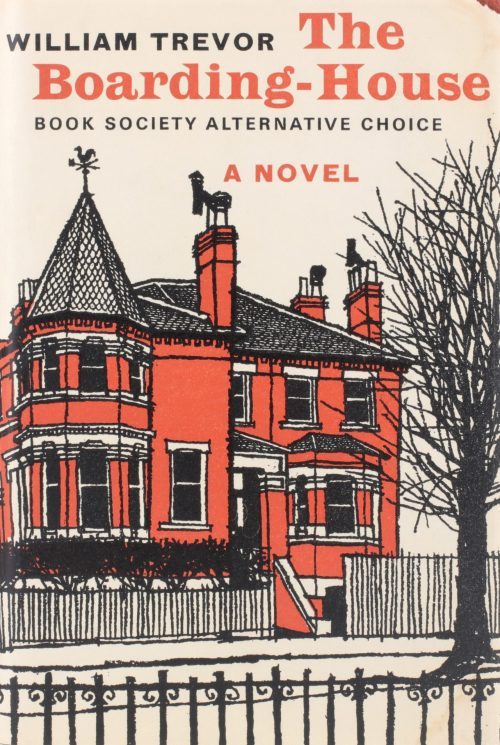
- #'The Boarding House' #1965 #6 #Female #Novel #Rose Cave
 Donate
Rose Cave 6
Few people had ever come to the bungalow in Ewell. A clergyman used to call now and again, and an elderly woman who had a connexion with the sale of November poppies for the British Legion. Once, one Saturday afternoon, a man had called around, descending from the seat of a motor-cycle and walking up the short, red-tiled path to the front door with his goggles still covering his eyes. She had seen him from the sitting-room window. ‘A man is coming,’ she said, and her mother had looked up quickly from something she was reading by the fire. ‘A man has got off a motor-bike,’ Rose Cave had said, ‘with goggles on his face.’ ‘My God!’ remarked his mother, standing up and crossing the room quickly. ‘Go and play in the kitchen, Rose.’ The bell had sounded, and her mother, a hand to her hair, had gone to the door and allowed the goggled person to enter the hall and then the sitting-room.
‘Not dead,’ her mother often explained about the man who had been her father. ‘Not dead, Rose; it is just that he does not choose to live here with us.’ And when she questioned that she was told that one day she would understand it better.
In the kitchen she took out baking-tins and strainers and played for a while, talking to a doll in the window-sill, arranging the cooking things on the kitchen table. She was six at the time; already she could hear herself saying one day soon at school: ‘My father came in off his motor-bike and is not ever going away again, because he likes our house and wants to stay.’ Someone, probably Elsie Troop, the girl who said she’d seen the King, would say at once: ‘It’s only a bungalow.’ Elsie Troop said the invariably; she had said it so often that some of the others were beginning to say it too. But as she played with the baking-tins and strainers she didn’t mind at all what Elsie Troop might say. She tiptoed into the hall and peered through the coloured glass in the hall-door to see if she could catch a glimpse of the motor-cycle. She heard the subdued tones of her mother and the man as she tiptoed back to the kitchen.
Later her mother came out to make tea. She carried a tray back to the sitting-room, murmuring to herself in agitation, her face flushed, commenting that all there was was a pound of Lincoln Creams. ‘May I have tea in there?’ Rose Cave had asked, knowing through intuition that she would not be allowed this. Her mother did not reply, but poured milk into a mug and gave her a slice of bread and a Lincoln Cream, and told her to be good.
